
Master Nutrition Coaching Workflow for Client Success

Juggling countless profiles and messages can leave even the most dedicated British nutrition coach feeling overwhelmed. Efficient workflows are vital for keeping client engagement high, especially when working with digital platforms like GetFitConnect. This guide offers practical strategies for organising comprehensive client profiles, deploying digital assessment tools and leveraging continuous meal tracking to deliver truly personalised nutrition support and save valuable time.
Table of Contents
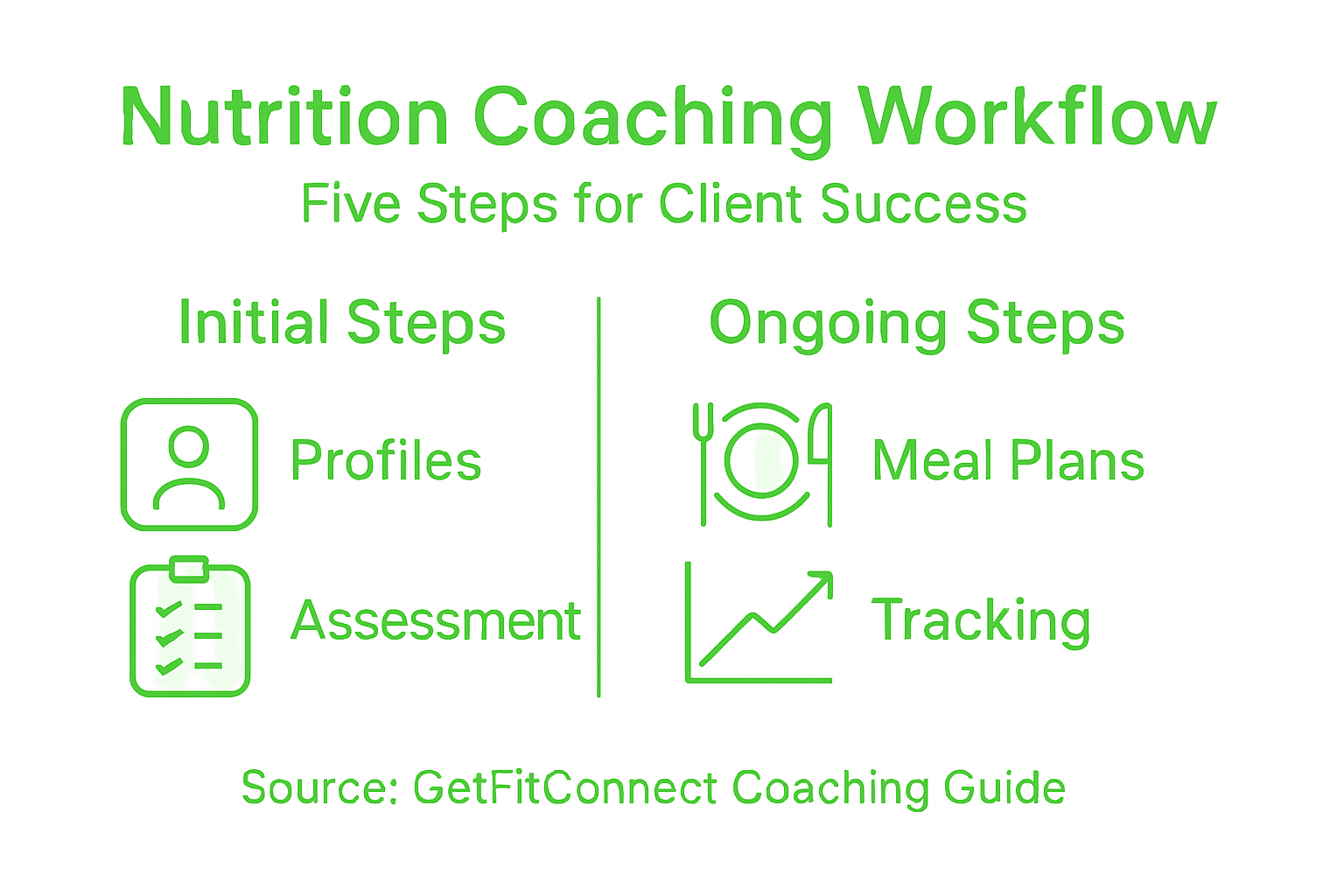
- Step 1: Set Up Client Profiles And Digital Tools
- Step 2: Assess Nutrition Needs And Gather Data
- Step 3: Design Personalised Meal Plans And Macros
- Step 4: Deploy Meal Tracking And Feedback Systems
- Step 5: Analyse Progress And Optimise Strategies
Quick Summary
1. Establish detailed client profiles Collect comprehensive data from clients to tailor nutrition plans effectively and track progress systematically. 2. Conduct thorough nutritional assessments Use both subjective and objective methods to determine clients’ eating patterns and individual nutritional needs accurately. 3. Design flexible meal plans Create meal plans that align with clients’ goals and preferences, allowing for variety and real-life application. 4. Implement consistent meal tracking Encourage clients to log their meals regularly for accountability and to identify nutrition patterns that require adjustments. 5. Regularly analyse client progress Systematically review progress metrics and adapt strategies based on insights to optimise results and keep clients motivated.Step 1: Set up client profiles and digital tools
Setting up comprehensive client profiles and digital tools forms the foundation of your nutrition coaching practice. This step ensures you capture essential information, track progress systematically, and deliver personalised care through a structured digital platform.
Start by gathering core client information when they first join your caseload. You’ll need basic demographics, health history, dietary preferences, allergies, lifestyle factors, and specific goals. This data becomes your reference point for creating tailored nutrition plans.
Key information to collect includes:
- Full name, contact details, and date of birth
- Current health conditions and medications
- Dietary restrictions and food preferences
- Typical daily schedule and activity levels
- Weight, height, and initial body composition measurements
- Specific nutrition goals (weight loss, muscle gain, performance improvement)
- Previous dieting history and what worked or failed
Next, input this information into your digital platform systematically. GetFitConnect allows you to create detailed client profiles that serve as your central hub for all coaching activities. Organise data logically so you can quickly reference client history during consultations.
Enable digital assessment tools to conduct virtual nutrition evaluations. Remote patient monitoring and digital tools allow you to assess dietary intake, track macronutrient targets, and monitor progress continuously. Set up automated tracking features so clients can log meals, capture photos, and record measurements between sessions.
Configure your messaging system for asynchronous communication. Clients should be able to ask quick questions, submit food photos for feedback, and receive guidance without waiting for scheduled calls. This ongoing contact builds trust and keeps accountability high.
Comprehensive client profiles save time during sessions and enable you to spot patterns in client behaviour that improve outcomes.
Set clear expectations about how your digital tools work. Show clients where to log data, how frequently to check messages, and what response timeframes they can expect. A quick orientation call prevents confusion and ensures consistent engagement.
Test your setup with your first few clients before scaling up. Notice which data fields you actually use, which tools feel intuitive, and where clients struggle with the platform. Refine your process based on real feedback rather than assumptions.
Pro tip: Create a simple one-page client onboarding document explaining your digital workflow, tool access instructions, and key features they’ll use most—this reduces support questions and gets clients productive faster.
Here’s a comparison of key digital tools for nutrition coaching and their core benefits:
Digital client profiles Centralise client information Quick reference, time saving Meal tracking applications Real-time food logging and photos Pattern spotting, boosts engagement Messaging platforms Asynchronous client communication Ongoing guidance, enhances trust Assessment tools Nutrition evaluation and risk ID Accurate data, better coachingStep 2: Assess nutrition needs and gather data
Assessing your client’s nutrition needs goes beyond their initial profile. This step involves collecting detailed information about their eating patterns, health status, and lifestyle to identify the root causes of their nutrition challenges and design truly personalised interventions.
Begin with a thorough consultation during your first session. Ask open-ended questions about their typical daily routine, meal timing, food preferences, and current eating behaviours. Understanding what they actually eat matters far more than what they think they should eat.
Use both subjective and objective data collection methods. Comprehensive data collection through client collaboration01200-X/fulltext) helps you identify nutritional risks and tailor interventions accurately. Subjective data includes client-reported symptoms, energy levels, digestion issues, and perceived barriers to healthy eating. Objective data covers measured outcomes like weight, body composition, blood work results, and logged food intake.
Gather essential assessment information:
- Current eating patterns and meal frequency
- Water and hydration habits
- Supplement or medication use affecting nutrition
- Exercise routine and intensity levels
- Sleep quality and stress management
- Family history of metabolic or digestive conditions
- Food budget and cooking time available
- Previous diet attempts and results
Conduct a dietary recall where clients describe what they ate over the past 24 hours. Ask for specific portion sizes, preparation methods, and times. This reveals actual intake patterns rather than assumed ones. For deeper insight, request a three-day food diary before your next session.
Assess their nutritional risk factors by reviewing health conditions, medications, and lifestyle constraints. Someone managing diabetes needs different guidance than an athlete focused on performance. Someone with limited cooking ability needs practical meal solutions.
Your assessment quality directly determines the effectiveness of your recommendations, so invest time in thorough, curious questioning.
Document everything systematically in your client’s digital profile. Note their goals, barriers, preferences, and any red flags requiring medical referral. This record becomes invaluable for tracking progress and adjusting strategies over time.
Wrap up your assessment by summarising what you’ve discovered and checking for accuracy. Clients appreciate feeling heard and understood. Ask if anything surprised you or if they’d like to clarify anything.
Pro tip: Send clients a simple food diary template before your first session so you have baseline data ready to discuss, saving time and showing you’re organised and thorough.
Step 3: Design personalised meal plans and macros
Designing personalised meal plans transforms your assessment data into actionable nutrition guidance. This step requires translating your understanding of macronutrients, energy balance, and metabolism into practical recommendations that clients can actually follow.
Start by calculating your client’s caloric needs based on their basal metabolic rate and activity level. Consider their goals (weight loss, muscle gain, athletic performance) and adjust calories accordingly. A client trying to lose weight needs a modest deficit, typically 300-500 calories below maintenance. Someone building muscle needs a slight surplus.

Determine macronutrient targets next. Translating nutrient science into tailored recommendations helps you establish practical meal plans optimised for individual needs. Protein needs vary by goal, but most active clients benefit from 1.6-2.2 grams per kilogram of body weight. Fat intake should provide roughly 20-35 per cent of total calories. The remainder comes from carbohydrates, adjusted based on their activity and preferences.
Key steps for macro planning:
- Calculate total daily energy expenditure
- Set protein targets based on goals and body weight
- Determine fat intake (20-35 per cent of calories)
- Assign remaining calories to carbohydrates
- Account for hydration needs alongside macros
- Build flexibility into the plan for adherence
Create meal options that match these targets rather than prescribing rigid meal sequences. Offer three breakfast options, multiple lunch choices, and flexible snack ideas. Clients are far more likely to stick with plans offering variety they genuinely enjoy.
Integrate biomedical and behavioural data00013-4/fulltext) when designing recommendations. Consider their food preferences, cultural background, cooking ability, and budget constraints. A plan that ignores these realities will fail regardless of how scientifically sound it is.
The best meal plan is the one your client will actually follow, not the mathematically perfect one they’ll abandon.
Use GetFitConnect’s meal planning tools to build and share these plans digitally. Clients should receive clear macro targets, portion sizes, and practical examples. Include foods they already enjoy whenever possible.
Review your plan with clients during your next session. Explain the logic behind your recommendations so they understand why you’ve made specific choices. This builds confidence and helps them make informed adjustments independently later.
Pro tip: Build a library of your own go-to meals with calculated macros so you can assemble personalised plans quickly, using real food combinations you’ve tested and trust.
Step 4: Deploy meal tracking and feedback systems
Deploying effective meal tracking and feedback systems keeps your clients accountable whilst giving you real-time visibility into their nutrition behaviours. This step transforms your coaching from periodic check-ins into continuous, data-driven guidance.
Set up your tracking infrastructure using GetFitConnect’s built-in tools. Clients should be able to log meals easily, either through text descriptions, photos, or barcode scanning. The simpler you make logging, the more consistently they’ll do it. Explain how to access the app, what information to capture, and how frequently you expect entries.
Embrace continuous monitoring through mobile applications to enhance engagement and adherence. When clients see their data tracked visually, they become more aware of patterns. A simple graph showing daily protein intake or water consumption motivates better choices.
Set clear tracking expectations:
- Log meals within 2 hours of eating, not from memory
- Include portion sizes and preparation methods
- Take photos of meals for context and accountability
- Record water intake and energy levels
- Note hunger cues, cravings, or emotional eating
- Flag meals out of the ordinary or special occasions
Review logged data before each session. Look for patterns rather than judging individual choices. Is your client consistently under-eating protein? Are they skipping meals on workdays? Are weekends derailing progress? These patterns reveal where your guidance needs adjusting.
Provide timely, specific feedback on what you observe. Avoid generic comments. Instead of “good job logging,” try “I noticed your protein was consistently low Monday through Wednesday, which might explain your energy dip. Let’s add a snack to those days.” Specific feedback shows you’re genuinely reviewing their data.
Use evidence-based strategies for effective feedback that promotes behaviour change. Balance encouragement with constructive suggestions. Celebrate what they’re doing well whilst identifying one or two practical adjustments for the coming week.
Regular, specific feedback keeps clients engaged and shows them their effort directly influences your recommendations.
Respond to messages within 24 hours when clients submit questions or food photos. Quick turnaround builds trust and prevents them from abandoning the tracking habit.
Pro tip: Create a simple feedback template for yourself so responses stay consistent and thorough: acknowledge what went well, identify one pattern, suggest one specific adjustment, and end with encouragement.
Step 5: Analyse progress and optimise strategies
Analysing your client’s progress systematically reveals what’s working and where adjustments are needed. This step moves you from passive observation to active strategy refinement, accelerating results and keeping clients motivated.
Review progress metrics regularly, ideally every two to four weeks. Track weight, body composition, energy levels, workout performance, digestion, and how clothes fit. Numbers matter, but so do subjective measures that indicate real-world improvement.
Look for patterns in the data. Predictive analytics and real-time data tracking help you analyse client progress and identify which strategies drive results. Has protein intake consistently matched targets? Did weeks with better hydration correlate with improved energy? Which meal timing felt sustainable for your client?
Key metrics to monitor:
- Weight and body composition changes
- Macro adherence rates and consistency
- Energy levels throughout the day
- Strength and workout performance gains
- Sleep quality and recovery
- Hunger and satiety patterns
- Digestive comfort and bloating
- Adherence to meal structure
When progress stalls, resist the urge to make drastic changes immediately. Instead, diagnose the real problem. Is your client under-eating? Over-stressed? Not sleeping enough? Lacking protein variety? Small, targeted adjustments beat wholesale plan overhauls.
Celebrate wins explicitly. If a client’s protein intake improved from 80 grams to 120 grams daily, acknowledge this success. Recognition reinforces behaviour and builds momentum toward bigger goals.
Use adaptive recommendations that evolve based on engagement and outcomes to refine your approach. If your client responds better to flexible daily targets than rigid meal timing, adjust accordingly. If they thrive with structured meal plans rather than loose guidelines, lean into structure.
Progress isn’t always linear, but consistent small improvements compound into transformative results over months.
Schedule formal progress reviews every four to six weeks. Share visual representations of their data, discuss wins and challenges, and collaboratively adjust strategies moving forward. Clients should feel like active partners in their progress, not passive recipients of your instructions.
Document what works for each client. These insights inform future coaching decisions and help you identify which strategies work best for specific personality types and goals.
Pro tip: Create a simple progress review template comparing week-to-week metrics, noting one thing they excelled at, identifying one area needing adjustment, and setting one specific focus for the coming month.
For quick reference, here is a summary of the most impactful progress metrics and their coaching relevance:
Body composition changes Fat/muscle trends over time Tracks physical transformation Macro adherence rate Dietary consistency with goals Informs support strategies Energy levels Daily vitality and alertness Reflects nutrition effectiveness Sleep quality Rest and recovery adequacy Affects weight and wellbeing Dietary variety Range of foods consumed Indicates sustainabilityElevate Your Nutrition Coaching with GetFitConnect
Mastering the nutrition coaching workflow means overcoming challenges like comprehensive client profiling, personalised meal planning, ongoing meal tracking, and detailed progress analysis. This article highlights the frustration many coaches face when trying to integrate macronutrient targets with real-world client behaviours and engagement. You know how crucial it is to convert assessment data into meal plans your clients will actually follow while maintaining consistent feedback and motivation.
Take control of your coaching journey today with GetFitConnect. Our platform offers tailored digital tools for creating detailed client profiles, easy-to-use macro tracking, and seamless communication channels that keep clients accountable between sessions. Whether you are a nutritionist or personal trainer, GetFitConnect empowers you to streamline your coaching process and build lasting client success with clear insights and continuous monitoring. Visit GetFitConnect now to transform your nutrition coaching practice with technology designed for UK fitness professionals and health enthusiasts alike.
Frequently Asked Questions
How can I set up effective client profiles in my nutrition coaching practice?
To set up effective client profiles, gather essential information such as demographics, health history, dietary preferences, and specific nutrition goals. Start by creating a structured digital profile that centralises this information, allowing for tailored meal plans and ongoing tracking in your coaching sessions.
What should I include in a nutrition assessment for my clients?
Include both subjective and objective data when assessing your clients’ nutrition needs. Collect information such as current eating patterns, hydration habits, exercise routines, and any health conditions or barriers that may affect their nutritional choices.
How do I design personalised meal plans based on client assessments?
Start by calculating your client’s caloric needs and establishing macronutrient targets based on their goals. Create meal options that match these targets, ensuring to incorporate their food preferences and cooking abilities to enhance adherence to the plan.
What step should I take to implement meal tracking systems for my clients?
Implement meal tracking systems by providing clients with easy-to-use tools for logging meals through text, photos, or barcode scanning. Encourage them to log their meals within two hours of eating to maintain accuracy and consistency, which will enhance accountability in your coaching.
How often should I analyse my clients’ progress?
You should analyse your clients’ progress every two to four weeks. Monitor various metrics like weight changes, adherence to macro targets, and overall energy levels to identify patterns and make necessary adjustments to their nutrition strategies.
What types of feedback are most effective for client engagement?
Provide timely and specific feedback that acknowledges what clients are doing well and identifies one area for improvement. Focus on constructive, actionable suggestions that directly relate to their logged data, helping them feel supported and motivated to continue their progress.
Recommended
- Find Personal Trainers Near You | FitConnect UK
- FitConnect - Find Your Perfect Fitness Coach | Personal Training, Nutrition & Combat Sports
- FitConnect - Find Your Perfect Fitness Coach | Personal Training, Nutrition & Combat Sports
- The Key to Carb Loading - MK Marathon Weekend, Milton Keynes 3-4 May 2026
Ready to Start Your Fitness Journey?
Connect with expert coaches who can help you achieve your goals.